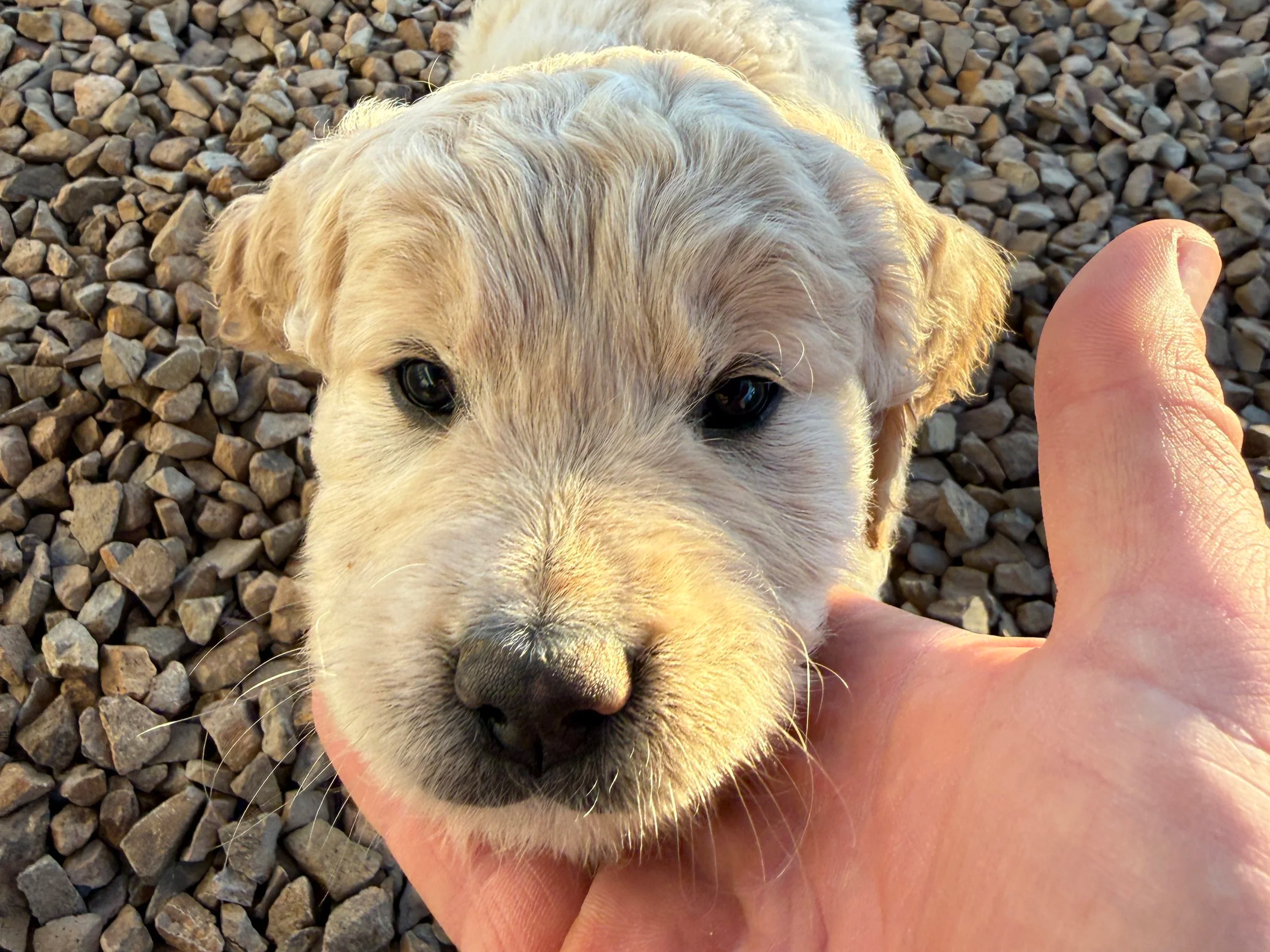
The First Week With Your Goldendoodle or Bernedoodle Puppy: What to Expect
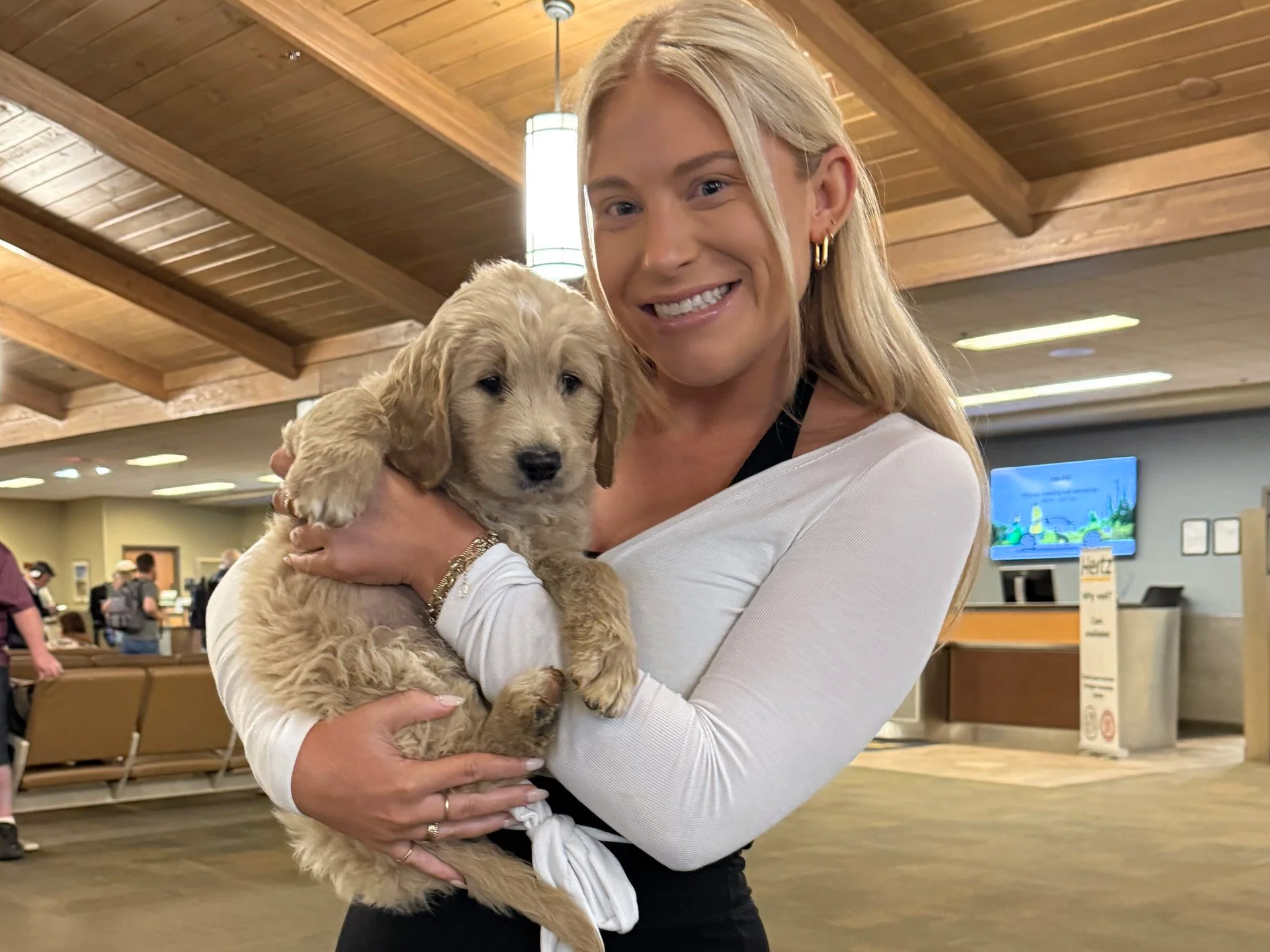
Puppy pickup day is one of those moments you don't forget. The drive home with a warm, fuzzy ball of fluff on someone's lap, the kids barely able to contain themselves, the mix of excitement and that quiet realization: okay, now what?
We've been through this journey with a lot of families, and we've had plenty of our own puppy moments here in the high desert of Central Oregon. So we want to give you a honest, practical, and encouraging picture of what that first week with your goldendoodle or bernedoodle puppy actually looks like — the beautiful parts and the harder ones.
Before Your Puppy Comes Home
The best first week actually starts before your puppy arrives. A little preparation goes a long way toward making the transition smoother for everyone, including your new doodle.
Set up the crate before pickup day. Place it in a quiet corner of a common area — not isolated, but not in the middle of chaos either. Put a soft blanket inside and, if possible, ask us to send home a small piece of fabric from the whelping box. That familiar scent is genuinely calming for a puppy in a new environment.
Puppy-proof your space. Get down on your hands and knees and look at your home from a puppy's eye level. Electrical cords, small objects, cabinet doors, and houseplants all look very different from down there. Goldendoodle and bernedoodle puppies are curious and mouthy — a safe environment sets them up to explore confidently.
Decide on your house rules ahead of time. Is the puppy allowed on the furniture? Which rooms are off-limits? Are the kids allowed to pick the puppy up unsupervised? These conversations are much easier to have before the puppy arrives than in the middle of a debate at 11pm when the puppy is crying and everyone is tired.
Day One: Arrival and Settling In
When your goldendoodle or bernedoodle puppy first comes home, resist the urge to invite everyone over. We know — everyone wants to meet the puppy. But the first day should be calm and quiet. Your puppy has just left their littermates, their familiar smells, and everything they've ever known. That's a lot.
Let your puppy explore at their own pace. Don't force interaction. Sit on the floor and let them come to you. This small act of patience builds trust faster than anything else.
Introduce the crate right away, but keep it positive. Toss a treat inside. Let them walk in and out freely. The goal on day one isn't for the puppy to sleep through the night in the crate — it's for the crate to feel like a safe, non-threatening space.
Expect some crying. It's normal, and it doesn't mean you did anything wrong or that your puppy is unhappy. It means they're a puppy. They'll settle as the days go on and they begin to feel secure.
Crate Training Your Goldendoodle or Bernedoodle Puppy
We're big believers in crate training at High Desert Family Doodles, and it's something we start laying the groundwork for before your puppy ever leaves us. Through our Puppy Culture and BadAss Breeder curriculum, your puppy has already had early exposure to crate-like spaces and confinement — which means you're not starting from scratch.
Here's the approach we recommend for the first week:
Keep sessions short and sweet. Start with just a few minutes at a time. Crate your puppy with a treat or a small chew, close the door, wait a few minutes, then let them out before they start crying. You're teaching them that the crate is temporary and good things happen there.
Never use the crate as punishment. The crate should be your puppy's den — their safe place. If it becomes associated with being in trouble, the battle becomes much harder.
Expect nighttime to be rough at first. Most goldendoodle and bernedoodle puppies will cry during the first few nights. The crate should be close to your bed if possible — the sound of your breathing is genuinely comforting. Some families find that placing a ticking clock wrapped in a blanket nearby also helps mimic the sensation of sleeping near littermates.
Build duration gradually. By the end of the first week, aim for your puppy to be comfortable in the crate for 30–60 minutes during the day. Nighttime will come. Be patient with yourself and with them.
Potty Training in the First Week
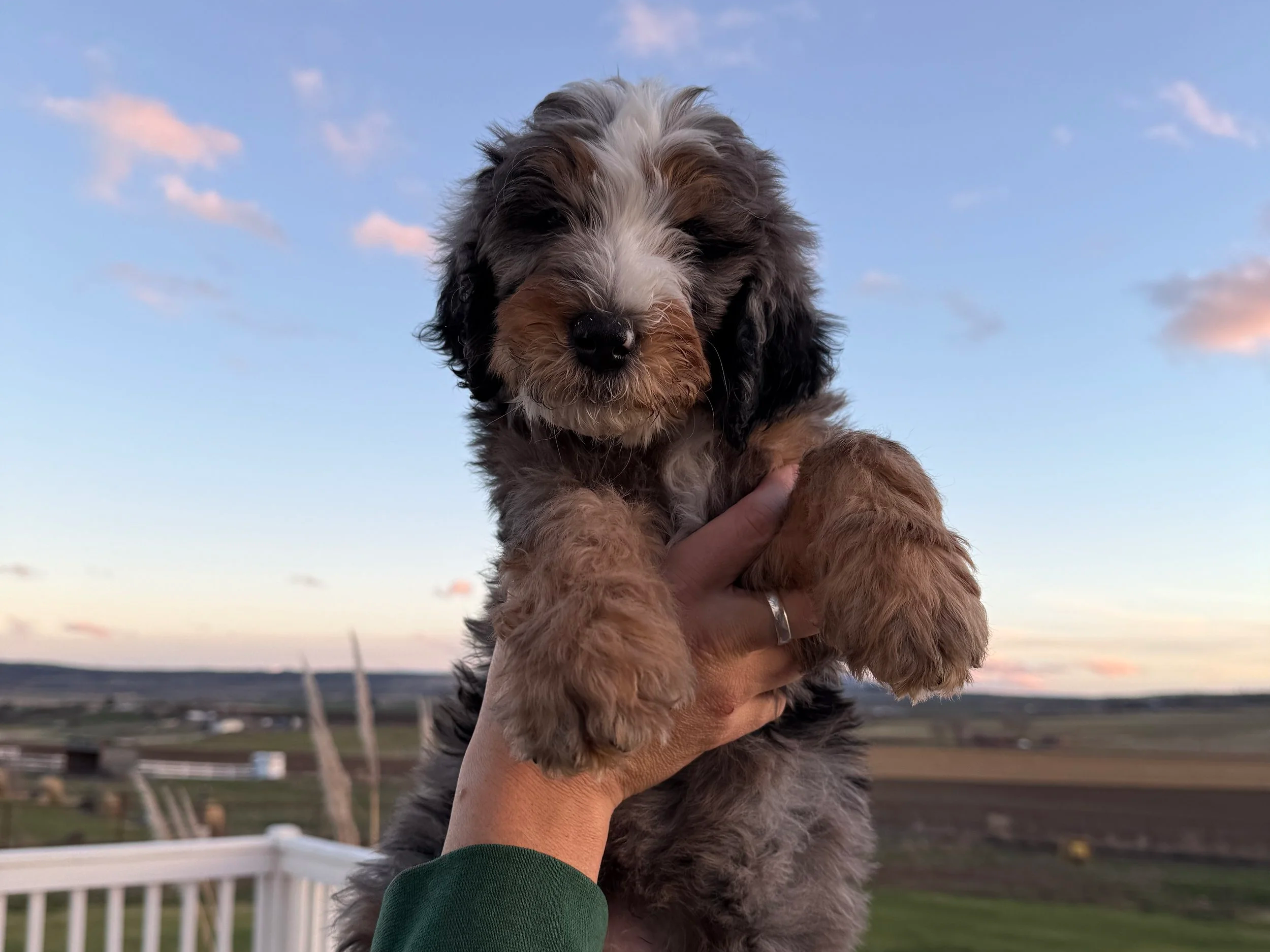
Potty training is the topic we get the most questions about, and for good reason — it takes consistency and feels relentless in the early days. The good news: goldendoodles and bernedoodles are intelligent dogs who typically catch on quickly.
The basics for week one:
Take your puppy outside immediately after waking up, after eating, after playing, and after any time in the crate — roughly every 1–2 hours during the day.
Choose a designated potty spot and use it consistently. The familiar smell will become a cue.
Praise enthusiastically the moment they go outside. Not after you come back inside — right then, in the yard, the second they finish. Timing matters enormously.
Accidents will happen. Clean them up with an enzyme cleaner and move on. Scolding a puppy for an accident they had even thirty seconds ago is not something they can connect to the behavior.
By the end of the first week, you likely won't be done potty training — but you should start to see a rhythm developing. That rhythm is the goal.
Feeding and Sleep in the First Week
Your puppy will come home from us with a small bag of PawTree/Purina food and information on what they've been eating. Consistency matters here — switching foods abruptly causes stomach upset, which is the last thing anyone needs in week one. If you plan to transition to a different food, do it gradually over 7–10 days by mixing increasing amounts of the new food with the old.
Puppies this age need a lot of sleep — sometimes 16–18 hours a day. It can feel alarming if you're not expecting it. A puppy that plays hard for 20 minutes and then crashes completely is a normal, healthy puppy. Protect that sleep. An overtired puppy is a cranky, bitey, hard-to-handle puppy.
Feed your puppy on a schedule — typically three times a day at this age. A schedule supports potty training because it makes the output predictable.
Managing Kids and Other Pets
If you have children, this week is a great opportunity to establish some important habits. Teach kids to sit on the floor when interacting with the puppy rather than carrying them. A dropped puppy is a real risk, and it's not worth it. Teach children to let the puppy approach them, not the other way around.
If you have other dogs, introduce them on neutral ground if possible — outside, on a walk, rather than in the house where existing pets may feel territorial. Keep early interactions brief and supervised. Most dogs come around quickly with a well-socialized doodle puppy, but give everyone time to adjust.
What We Send You Home With
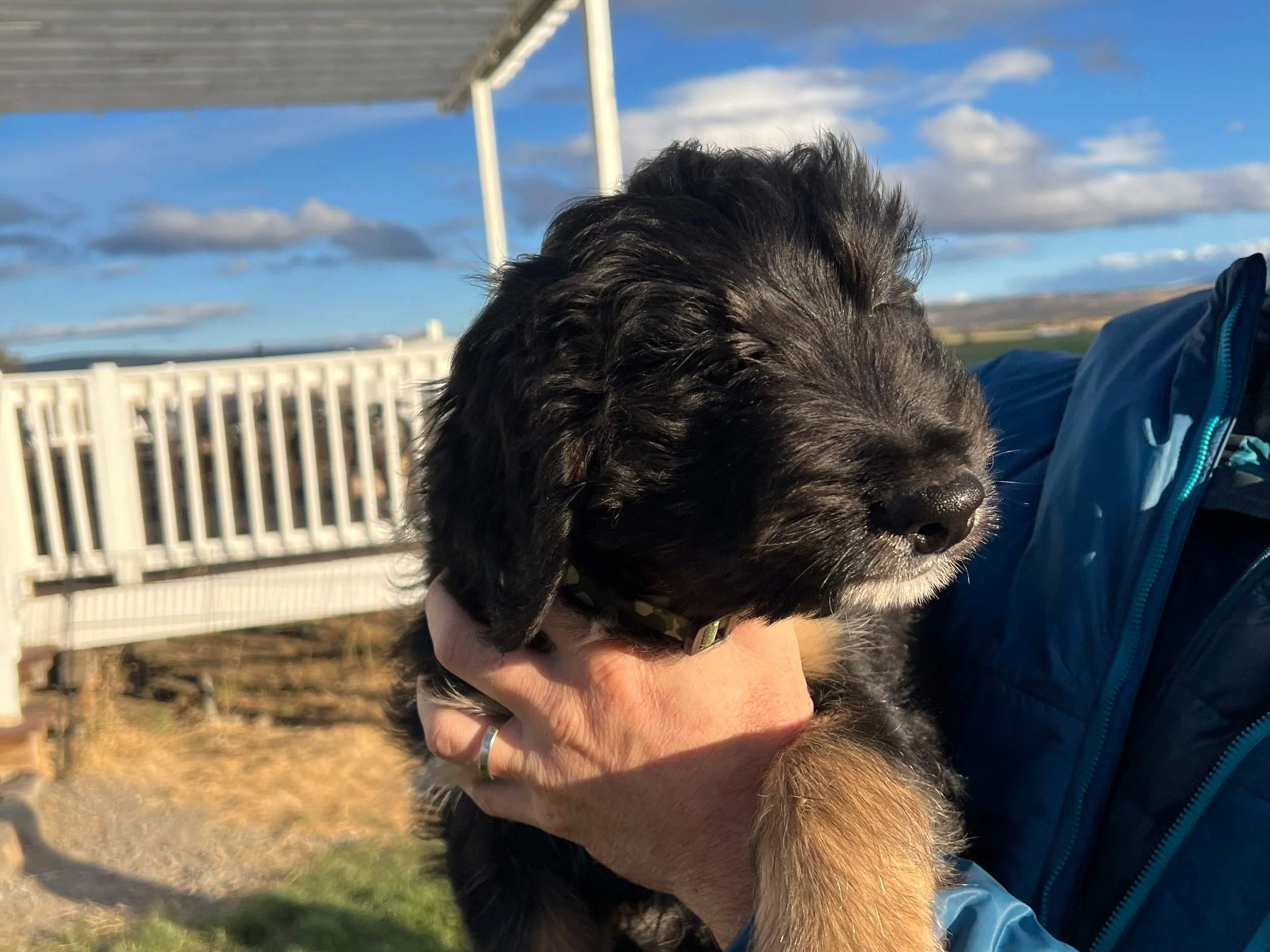
At High Desert Family Doodles, we don't just hand you a puppy and wish you luck. Every puppy goes home with a "Furever Home Bag" that includes a blanket from the whelping box, their favorite toy, a PawTree food starter, a detailed puppy packet covering the first few days and weeks, a vet report, and access to our HDFD family community.
We also offer discounted access to both Baxter & Bella's online puppy school and Gungho Dog Training — two resources we trust and recommend for continuing the training work we start here in Central Oregon. Ask us about the discount codes when you pick up your puppy.
You've Got This
The first week is intense. There will be moments of pure joy — that first morning when your puppy trots over to you with their tail going, or the first time they fall asleep in your lap. And there will be moments where you wonder if you made a mistake at 3am when the crate crying won't stop.
You didn't make a mistake. You're just in the thick of it.
We've watched so many families walk through this exact experience, and almost universally, by the end of week two the corner has been turned. The puppy feels at home. The family finds its rhythm. And the relationship that's forming — between your family and this dog — is one of the most rewarding things there is.
We're here for you through all of it. Reach out anytime at highdesertgoldendoodles@gmail.com or (541) 838-0840.
Erin & Jay Bryner breed goldendoodle and bernedoodle puppies in Central Oregon as part of High Desert Family Doodles. They are GANA Gold Level members, Good Dog certified, and raise every litter using the Puppy Culture and BadAss Breeder curriculum.
Interested in a goldendoodle or bernedoodle puppy? View our upcoming litters or learn more about our puppy process.