
Red Flags to Watch for When Choosing a Doodle Breeder
We want to say something upfront: this post isn't about us. It's about you, and the decision you're about to make — one that's going to affect your family for the next ten to fifteen years.
We've been in the doodle world long enough to have seen what good breeding looks like and what it doesn't. We've talked to families who came to us after a heartbreaking experience with another breeder — a dog with serious health issues, a puppy so undersocialized it took months to begin trusting people, a breeder who disappeared the moment a problem arose. Those conversations are part of why we do what we do, and they're why we want to help you know what to look for before you commit.
So here's our honest, no-fluff guide to the red flags that should give you pause when you're evaluating a doodle breeder.
1. "Health Tested" Without Any Details
This is probably the most common and consequential red flag out there, and it's worth spending some time on.
Almost every doodle breeder in existence will tell you their dogs are "health tested." The phrase has become so universal that it's almost meaningless — because what one breeder calls health testing and what another means by it can be completely different things.
A basic genetic swab panel from a consumer DNA company is not the same as a full genetic health panel. A self-reported "clear" from a vet is not the same as an OFA-certified hip evaluation. Health testing that doesn't involve independent, third-party verification is not something you should be able to rely on. If you want to go deeper on what genetic testing actually looks like in practice, we've written about our approach to CDDY, IVDD, and CDPA on our website.
When a breeder tells you their dogs are health tested, ask: what specific tests? What organizations set the passing standards? Can I see the results?
At High Desert Family Doodles, our parent dogs pass hip (Pennhip/OFA), elbow, patella, cardiac, and eye screenings, plus genetic panels, before they ever enter our breeding program. GANA and Good Dog set the passing standards — not us. That distinction matters, because it means you're not just taking our word for it.
2. Puppies Always Available
A responsible breeding program has a rhythm — planned litters, waitlists, thoughtful pairings. A breeder who always has puppies available, regardless of the time of year, is almost certainly running more litters than they can responsibly manage, or they're a broker sourcing puppies from elsewhere.
Puppy mills and irresponsible backyard breeders stay in business partly because they always have inventory. A breeder who is deeply invested in each litter, who is doing the work of Puppy Culture enrichment and daily handling and health monitoring, simply cannot produce litter after litter without compromising the care that goes into each one.
A waitlist isn't a red flag. It's actually a green one.
3. No Questions Asked of You
This one surprises a lot of people, but hear us out: a breeder who doesn't ask you anything about your family, your lifestyle, your home, or your experience with dogs should make you wonder what they actually care about.
We genuinely want to know about the families we place our puppies with. Not to be gatekeepers, but because we care about where these dogs are going to spend their lives. We ask about your home setup, your activity level, whether you have kids or other pets, what size and temperament you're hoping for. That information helps us match the right puppy to the right family — and a good match benefits everyone, especially the dog.
A breeder who just asks for a deposit and sends you on your way isn't invested in the outcome.
4. No Contract or Health Guarantee
A written contract protects you. It spells out what the breeder is responsible for, what health guarantee they offer, and what happens if something goes wrong. A breeder who won't provide one — or who offers only a vague verbal assurance — is a breeder who doesn't want to be held accountable.
Look specifically for the length of the health guarantee and what it covers. A one-year guarantee is a minimum. Two years is the standard for a serious program. We offer a two-year written health guarantee on every puppy, because we're confident in our health testing and stand behind what we breed.
5. No Transparency About the Parent Dogs
You should be able to know who your puppy's parents are. You should be able to see photos of them, learn about their temperaments, and understand their health testing results. Ideally, you should be able to meet them in person — or at minimum, see them on video.
A breeder who is vague about the parents, who doesn't have photos readily available, or who can't tell you much about the mother beyond her color and size, is a breeder who either doesn't know their dogs well or doesn't want you to know them.
The parents are half the picture. Their temperaments and health directly shape what your puppy is going to be like. You deserve full transparency.
6. Unusually Low Prices
We know this one is uncomfortable to say, because it can come across as self-serving. But the reality is that responsible breeding is expensive — OFA testing, genetic panels, quality nutrition, whelping supplies, veterinary care, curriculum materials, certifications, the time and labor of doing it right. Those costs are real, and they have to be reflected somewhere.
A goldendoodle or bernedoodle offered at a price dramatically below the market average almost always means something has been cut. Maybe it's health testing. Maybe it's the quality of care during the first critical weeks. Maybe it's both.
We're not saying you should pay any amount a breeder asks without scrutinizing what you're getting. But if a price seems too good to be true, it's worth asking very carefully what's been left out.
7. No Socialization Protocol
The first eight weeks of a puppy's life are arguably the most important of their entire development. The brain is forming. Critical windows for socialization, confidence building, and emotional resilience are opening and closing. What happens — or doesn't happen — during this time has a lasting effect on who that dog becomes.
Ask any breeder you're considering: what does your socialization protocol look like? Do you use Puppy Culture or any structured enrichment curriculum? Do you begin Early Neurological Stimulation? What kind of handling and exposure do the puppies receive before they go home?
A breeder who gives you a vague answer, or who treats socialization as an afterthought, is leaving the most important work undone. We follow the Puppy Culture and BadAss Breeder curriculum with every single litter — not because it's a marketing point, but because we've gone deep enough into this work to know how much it matters.
8. No Membership in Breed Organizations
Organizations like GANA (Goldendoodle Association of North America) and Good Dog exist specifically to set and enforce standards for breeders. Membership isn't free — it requires meeting health testing requirements, adhering to ethical breeding practices, and submitting to accountability.
A breeder who isn't a member of any recognized organization isn't necessarily bad, but it does mean there's no third party holding them to a standard. When we say we're GANA Gold Level and Good Dog certified, we're telling you that two independent organizations have reviewed our practices and confirmed we meet their requirements. That's meaningful.
9. Pressure to Decide Quickly
A breeder who pressures you to commit immediately — "I have three other families looking at this puppy" — is using urgency as a sales tactic. A good breeder wants you to be sure. They want the match to be right. They'd rather you take the time to ask questions and feel confident than rush into a decision that doesn't serve you or the puppy.
Take your time. Ask your questions. If a breeder makes you feel like careful consideration is a problem, that tells you something.
10. No Ongoing Support After Go-Home
A responsible breeder's relationship with your family doesn't end on pickup day. They should be someone you can reach out to when you have questions — about training, about health concerns, about whether a behavior is normal. They should want to know how your puppy is doing.
We stay in touch with our families. We love getting updates, photos, and videos of our puppies growing up. And when families have questions, we want to be a resource. That's not an obligation we take on reluctantly — it's something we genuinely enjoy.
The Bottom Line
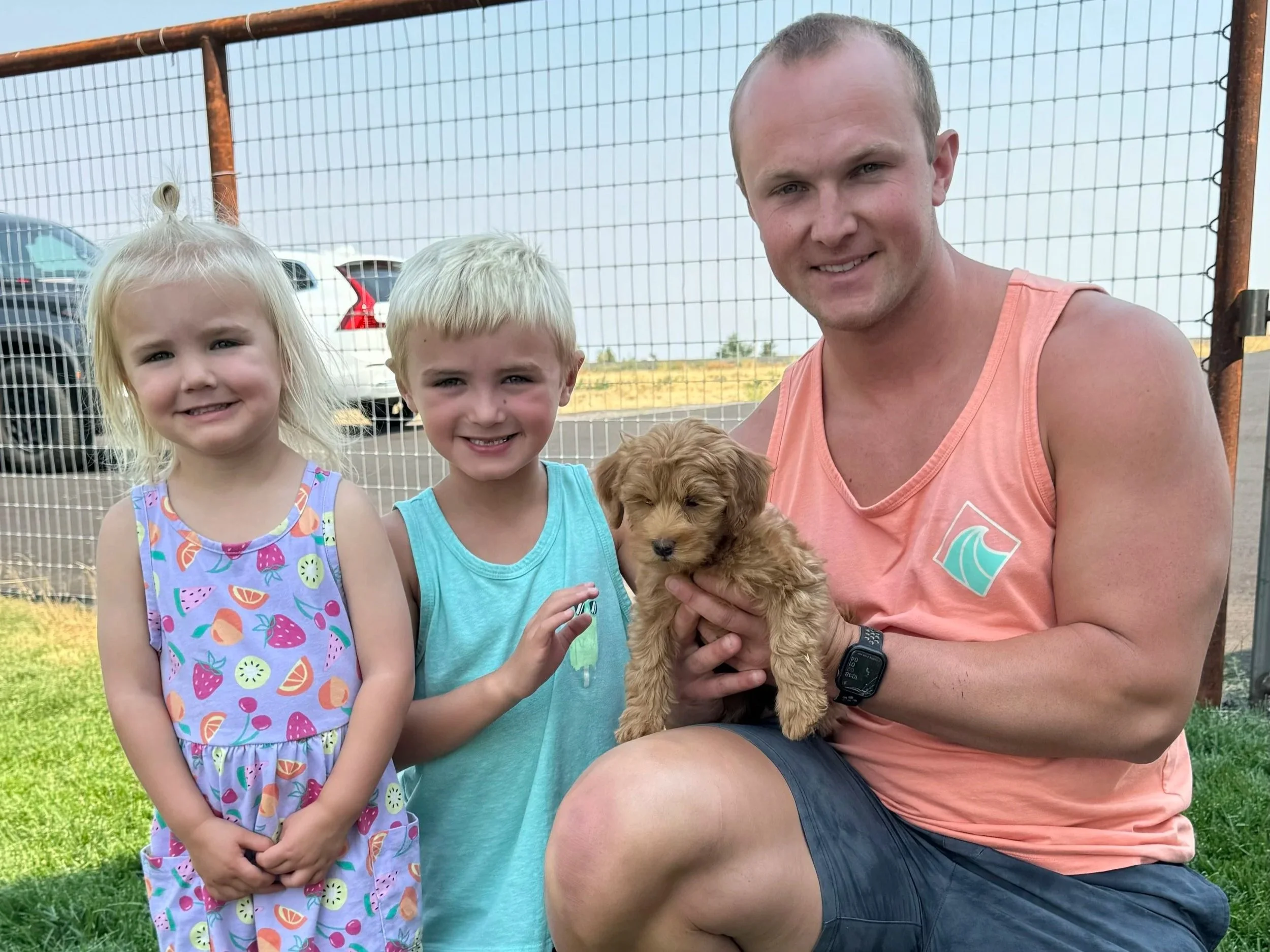
Finding the right breeder takes time, and that's okay. The questions worth asking are the ones a good breeder will be happy to answer. If you ask about health testing and a breeder gets defensive, that's information. If you ask about their socialization protocol and they go quiet, that's information too.
We'd love to be the breeder you land on — but more than that, we want you to end up with a puppy who is healthy, well-raised, and ready to flourish in your family. Wherever you find that, we're rooting for you. If you like what you see here, we'd love for you to take a look at our upcoming litters and see if we might be the right fit for your family.
And if you'd like to talk through what our program looks like in more detail, we're always happy to chat. Still have questions? Our FAQ page covers the most common things families ask us before applying.
Learn more about our program: About Us | Health Testing | Puppy Information & Application